
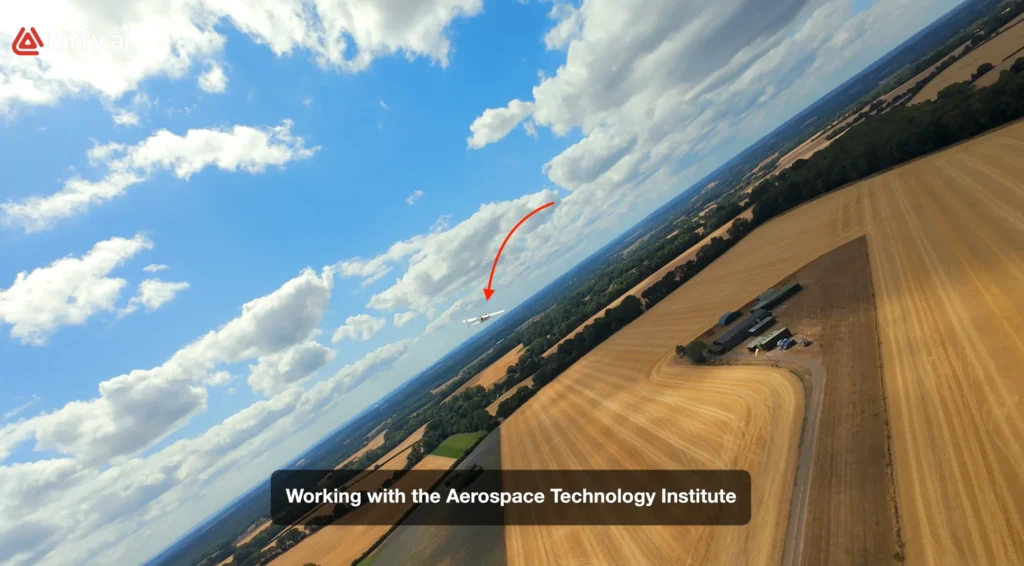
Client: Luffy AI, in partnership with Soton UAV (University of Southampton, Boldrewood Innovation Campus) and the Aerospace Technology Institute
Services: Drone and FPV filming, BTS photography, narrative development, edit
Headline result: Five flights, 16 simulated fault engagements, and a genuinely technical live test distilled into a draft narrative delivered within 2 days of the shoot
The client
Luffy AI builds neuroplastic AI for real-time control of physical machines. This project sits alongside the founding-story video EMV produced for Luffy AI in July 2026 but where that film told the company’s story, this one had to prove the product works, under real flight conditions, to an audience that might never have heard of fault-tolerant control before watching.
The subject: Luffy AI’s Adaptive Neural Controller (ANC), a fault-tolerant flight control system for fixed-wing aircraft that combines three things researchers have historically struggled to bring together in one system fault detection and isolation, real-time reconfigurability, and robustness to turbulence, centre-of-mass shifts, and actuator or sensor faults. It’s trained via curriculum-style simulation rather than manual tuning, runs on firmware or edge hardware with no cloud required, and is built to be plug-and-play rather than needing bespoke setup for every aircraft.
Luffy AI’s Operations Manager approached EMV on 29 July to film a live flight test day on 5 August at Farley Farm Airfield, Romsey run in partnership with Soton UAV, the University of Southampton’s flight test team.
A planning call on 31 July with EMV, Luffy AI, and Soton UAV settled the brief. The instinct going in was to capture strong aerial footage of the aircraft flying but the team agreed that raw flight footage alone would look generic, effectively “just a plane flying,” and wouldn’t communicate what actually made the test significant. The brief shifted to a narrative-driven approach built around the moments that mattered: the manual-to-AI mode switch, the controller detecting and compensating for a fault in real time, and authentic technical detail telemetry screens, headset audio, a logs review rather than polished but generic aerial shots.
What we did
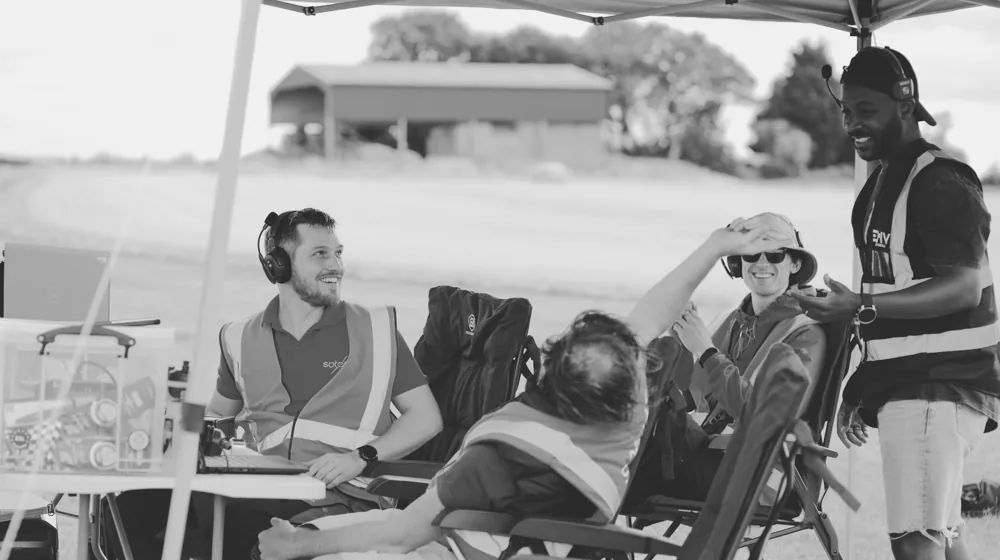
Flight day ran in windy, gusty conditions throughout (averaging 9.6 m/s, gusting to 10.8 m/s) genuine field conditions, not a controlled set. Both objectives, media capture and failure-mode testing, were met successfully across five flights totalling 53 minutes 54 seconds of flight time, 42.77 km covered, and 16 ANC engagements.
Two failure modes were deliberately tested and filmed a simulated port aileron offset and a simulated port aileron static fault clearly demonstrating the controller compensating for a fault in real time. Every flight’s manual-to-AI mode switch was captured on drone and FPV footage, alongside telemetry and Mission Planner screen recordings with headset audio supplied by Soton UAV, full flight log files, and 136 BTS stills of the team, aircraft, and equipment.
For the aerial capture, Alex opted for the DJI Avata 2 over the more conventional Air 3 a deliberate choice for a more immersive, closer-to-the-action FPV perspective rather than the safer, more standard aerial shot. In wind gusting past 10 m/s, that meant flying in Sport Mode for the extra control margin, a call made only because conditions allowed it to be flown safely, not despite the wind.
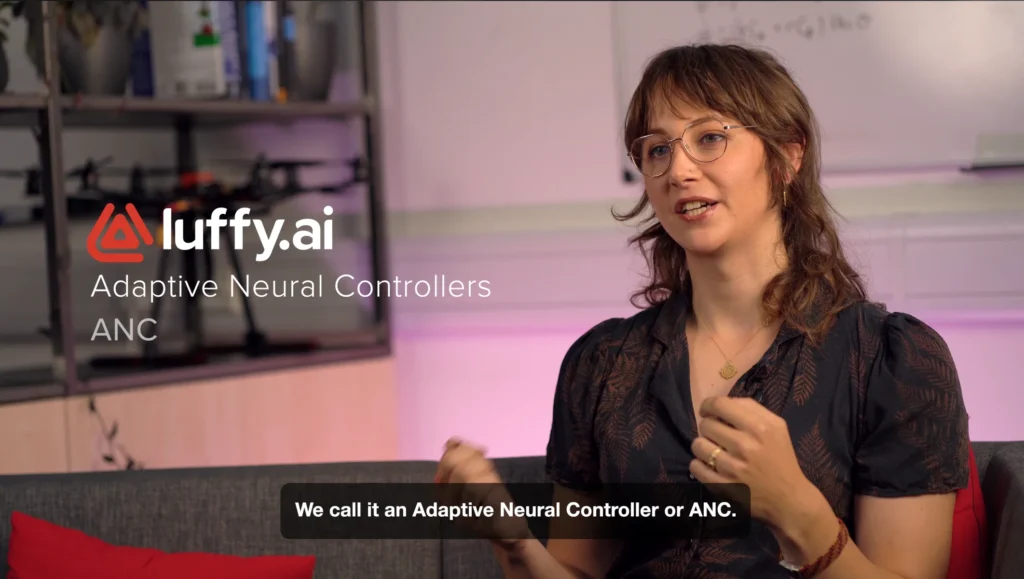
We also filmed an on-camera interview with Luffy AI’s controls and AI engineer, on how the controller was trained, plus a logs review segment shot over-shoulder on the airfield for authenticity rather than staged after the fact.
Turning that material into something watchable meant building a structure around hook, proof, and payoff translating genuinely technical concepts like fault detection and reconfigurability into plain-English captions, and closing on the product’s real commercial benefits. With no confirmed target-audience brief to work from, the draft deliberately blends engineering credibility with commercial proof-of-concept, flagged to the Luffy AI team for feedback before lock rather than guessed at silently.
The result
A draft package two videos and the full BTS photo set was delivered to the team just two days after the shoot. The BTS photography was approved on 10 August with no confidentiality concerns raised. The video cut is still under review.
Why it matters for your business
Most technical work never gets shown properly, because the people who understand it best rarely have time to explain it, and generic footage doesn’t do the work justice. If what you’re building is genuinely hard to explain, we don’t need you to dumb it down. We need the real thing, filmed properly, with a structure that carries a non-technical audience through it.
Working on something hard to explain? Get in touch and let’s find out what a proper narrative could do for it.